
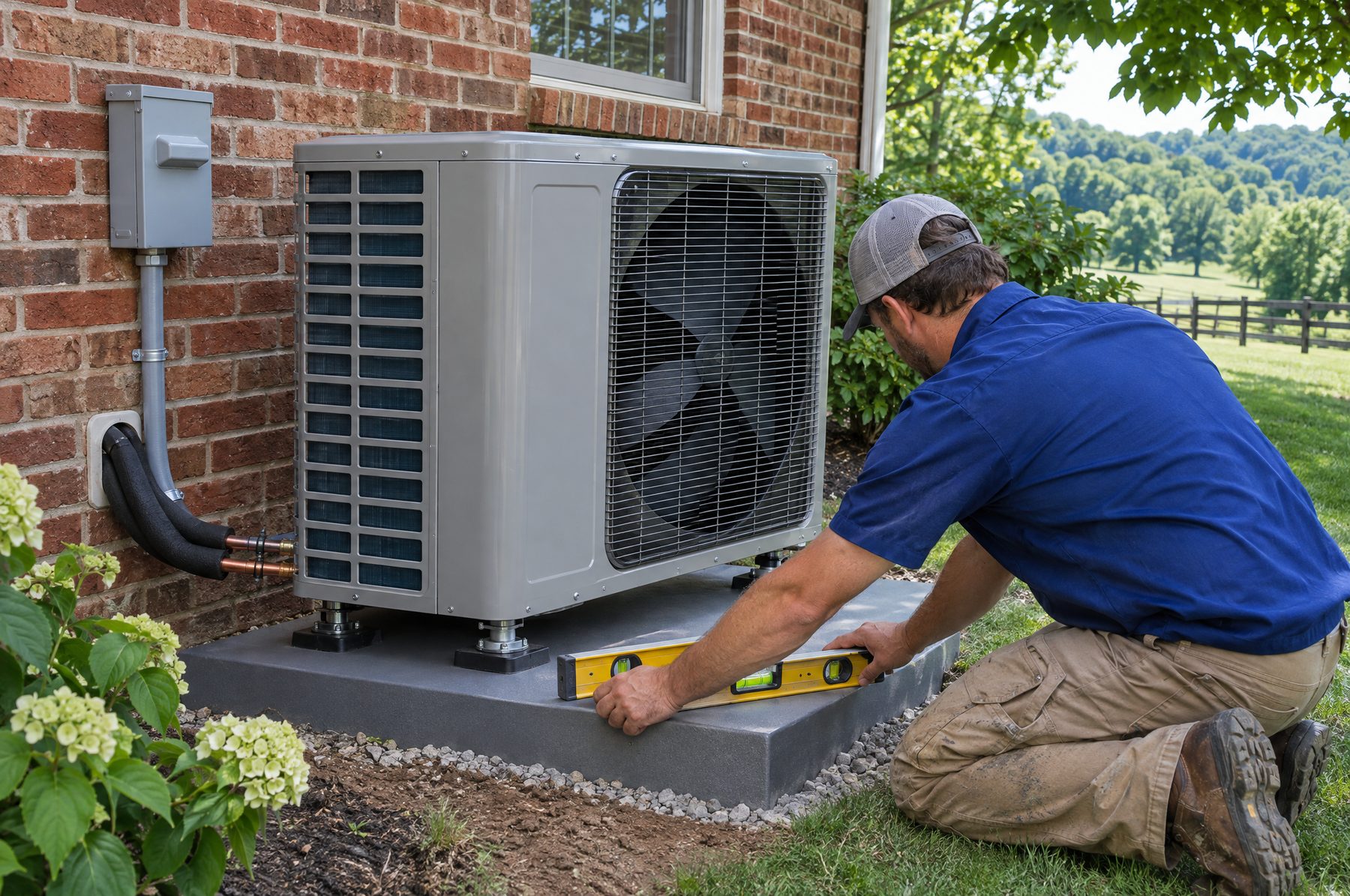
Heat pump installation in Louisville, KY, for both halves of the year
A heat pump moves heat instead of making it: out of the house all summer, into it all winter. In Louisville it has to do both jobs well, drying a sticky July house and keeping up through a January cold snap. We size and set it up for both, and keep your gas furnace as backup where that is the better answer.
- Sized by a room by room load calculation
- Set up to dry the house in summer
- Dual fuel with your furnace where it fits
- Checked again in the opposite season
Tell us about your house and your current system
We usually answer the same day, and within the hour when a house has no heat or no cooling.
No heat or no cooling and someone at home is elderly, unwell or very young? Call or text now: 502-555-0147
One system, two directions
Inside every heat pump is a loop of refrigerant that carries heat from one coil to the other. In summer it picks up heat and water from the air inside and dumps the heat outside, like an air conditioner. In winter a reversing valve flips the direction, and the same loop pulls heat out of the outdoor air and brings it in.
That is why we set a heat pump up for both halves of the year at once. The airflow and fan settings that dry the house in July are not the ones that feel right in January, and a modern thermostat can run each season its own way. See thermostats and humidity control.
The year a Louisville heat pump has to handle
From NOAA's 1991 to 2020 normals for Louisville Muhammad Ali International Airport.
1,742cooling degree days
A normal year's cooling load
About twice what a Minneapolis system sees
3,936heating degree days
A normal year's heating load
Mild enough for a heat pump most of the winter
74nights
At or below freezing
Defrost cycles are part of normal winter running
0.5nights
At or below zero in a normal year
Rare, but the coldest hours are when backup heat matters
Heat pump only, or dual fuel?
Both work around Louisville. Which one fits depends on the house and what is already in it.
Dual fuel
You already have a gas furnace in good shape, or you want gas heat for the coldest days. The heat pump carries the cooling and most of the heating; the furnace takes the cold snaps.
Heat pump with electric backup
No gas at the house, or you are retiring the furnace. We size the heat pump to cover more of the winter and add electric heat strips sized to the house for the coldest hours.
Ductless
A room or addition the ducts never reached, or an older house with no ductwork. One outdoor unit can run one or more indoor heads.
How a heat pump install goes
Load calculation.
Room by room, from the house itself: walls, windows, attic, orientation. That sets the size.
Ducts and airflow checked.
We measure what the ducts can carry and fix the joints and returns that need it.
Installed and set up.
Pad, line set, drain, electrical, thermostat. Airflow and fan settings chosen for humidity as well as temperature.
Back in the other season.
If we install in summer, we come back in winter to watch it heat and defrost. And the other way round.
What the numbers on a heat pump quote mean
Federal minimums for systems made since January 1, 2023, and what to ask about each.
| Rating | What it measures | Federal minimum (split system) |
|---|---|---|
| SEER2 | Cooling efficiency over a season | 14.3 |
| HSPF2 | Heating efficiency over a season | 7.5 |
| Capacity | How much heat it moves, in Btu per hour | Set by your load calculation, not a minimum |
| Refrigerant | What runs in the loop | New systems since January 1, 2025 use lower global warming potential refrigerants |
| Listing | Safety listing | Kentucky's code calls for UL 1995 or UL/CSA/ANCE 60335-2-40 |
What happens in a cold snap
A heat pump's heating output falls as the outdoor temperature falls, while the house needs more heat. Somewhere those two lines cross. That crossing point is different for every house, and it is the number we plan around.
Above the crossing point
The heat pump carries the house on its own. Most of a Louisville winter sits here.
Near it
The heat pump runs long, steady cycles and defrosts now and then. Normal, and nothing to worry about.
Below it
Backup heat comes in: the gas furnace in a dual fuel system, or electric heat strips in an all-electric one. We set where that happens from your house's heat loss.
Heat pump installation around Louisville
We drive out from Jeffersontown. Each town has its own page with the drive, the houses we see there and the office that handles the HVAC permit, because that office is not the same everywhere.
St. Matthews
About 7 miles from the office. The city wants its own Letter of Compliance before Louisville Metro issues a building permit.
Louisville
About 12 miles to the Highlands, 14 to Old Louisville. Louisville Metro Construction Review issues the HVAC permit.
Prospect
About 13.5 miles. A city in two counties, with a different HVAC permit office on each side of the line.
Mount Washington and Shepherdsville
About 12 and 21.5 miles south into Bullitt County, where permits run through the county and the city, not Louisville Metro.
Heat pump questions we hear most
Will a heat pump keep my house warm in a Louisville winter?
In most houses, for most of the winter, yes. A normal Louisville year has 74 nights at or below freezing but only about half a night at or below zero (NOAA 1991 to 2020 normals at the airport). The cold snaps are what a heat pump has to be planned for. That is why we size it with a load calculation and, in many houses, keep the gas furnace to take over on the coldest days.
What is dual fuel?
A heat pump and a gas furnace on the same ductwork, controlled by one thermostat. The heat pump cools in summer and heats on mild and cool days. When the outdoor temperature drops to the point where the heat pump cannot keep up with the house, the furnace takes over. We set that switch point from your house's heat loss, not from a default.
Why does my heat pump blow steam in winter?
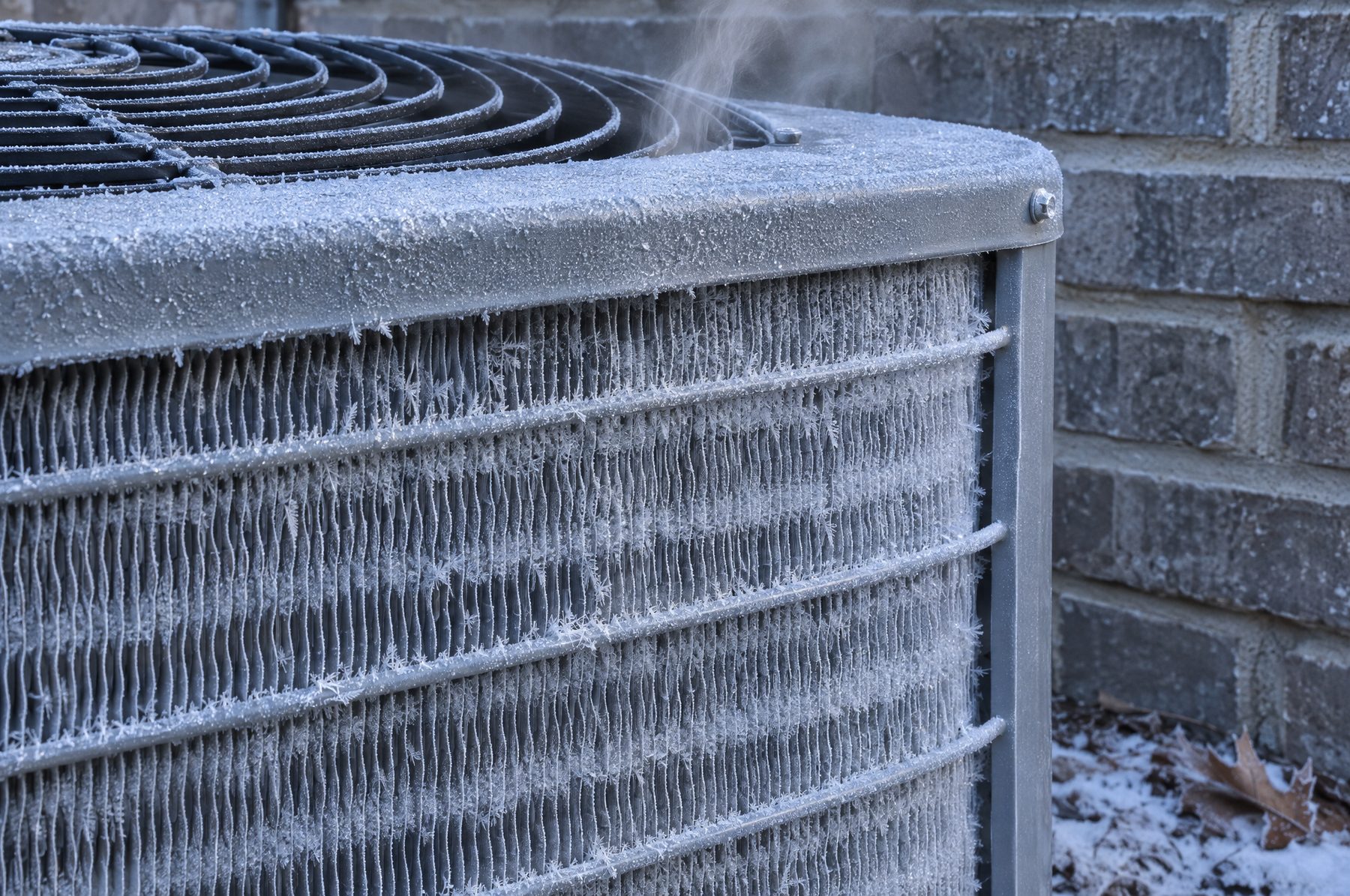
That is the defrost cycle. On cold, damp days frost builds on the outdoor coil. The heat pump briefly runs in reverse to melt it, and the meltwater steams off. A few minutes of steam now and then is normal. A coil that stays iced over, or a defrost that runs constantly, needs a look.
What efficiency does a new heat pump have to meet?
Split system heat pumps made since January 1, 2023 must reach at least 14.3 SEER2 for cooling and 7.5 HSPF2 for heating under the federal standard. Packaged units have lower minimums (13.4 SEER2 and 6.7 HSPF2). We will show you where the system we quote sits against those numbers.
Is there a rebate or tax credit?
LG&E's current program, called Residential Rebates, lists air source and ductless heat pumps among the equipment it covers for eligible customers. We do not quote rebate amounts, because they are set by the utility; check its page or ask us to help you look. The federal 25C tax credit ended for systems placed in service after December 31, 2025.
Can I keep my existing ductwork?
Usually. We check the duct sizes against the airflow the new system needs and look for leaky joints. Sometimes a return needs to be added or enlarged. If the ducts need work, it is written into the quote as its own line.
Do heat pumps dry the house as well as an air conditioner?
In cooling mode a heat pump is an air conditioner, so yes, if it is sized and set up for it. The same rules apply: not oversized, fan on auto, and a dehumidify setting where the equipment supports one. See humidity control.
Tell us about your house and what heats it now
The age of the furnace and air conditioner if you know them, whether you have gas, and which rooms are uncomfortable in summer or winter.
Book a heat pump visit
We usually answer the same day, and within the hour when a house has no heat or no cooling.
No heat or no cooling and someone at home is elderly, unwell or very young? Call or text now: 502-555-0147